
If you have been quoted a steel building “60 days from order to ready,” you have been quoted a fairy tale – at least in British Columbia. Between geotechnical investigation, BC permit reviews, fabrication on a North American manufacturing schedule, and a foundation that needs three weeks to cure before anyone bolts a column to it, a realistic timeline from your first serious quote to handing over the keys is six to twelve months.
That is not a sales pitch for slowness. It is the truth, and once you know where every week of that schedule actually goes, you can compress it. You can also spot the parts of a competing quote that quietly hide three months of risk.
This guide walks through the six phases of a BC steel building project, the lead times that come with each, the BC-specific factors that other articles ignore, and the schedules of three real-world examples – from a 9,000 sq ft equipment shed in Vernon to a 45,000 sq ft food-grade industrial building in Burnaby.
The honest answer: six to twelve months for most BC projects
Before we break it apart, here is the realistic range for a pre-engineered steel building in British Columbia, measured from the moment you sign a contract to the moment you receive your occupancy permit.
A simple agricultural building on rural land with no rezoning typically takes five to seven months. A mid-size commercial warehouse in the Lower Mainland with straightforward zoning lands in the eight to ten month band. A complex industrial project that requires a development permit, geotechnical remediation, or a tenant improvement build-out can easily run ten to fourteen months or longer.
If a contractor or kit supplier promises you something dramatically shorter than these numbers, ask them which phase they are skipping or shortcutting. There is usually an answer, and it usually translates to risk that ends up on your side of the table.
The full timeline at a glance
Some of these phases must happen sequentially – you cannot fabricate steel before the structural engineer has sealed the drawings, and you cannot erect frames before the foundation cures. Others can and should overlap. The difference between a sequential schedule and a parallel-tracked one is often three months on the same project. That is what experienced builders do for a living.
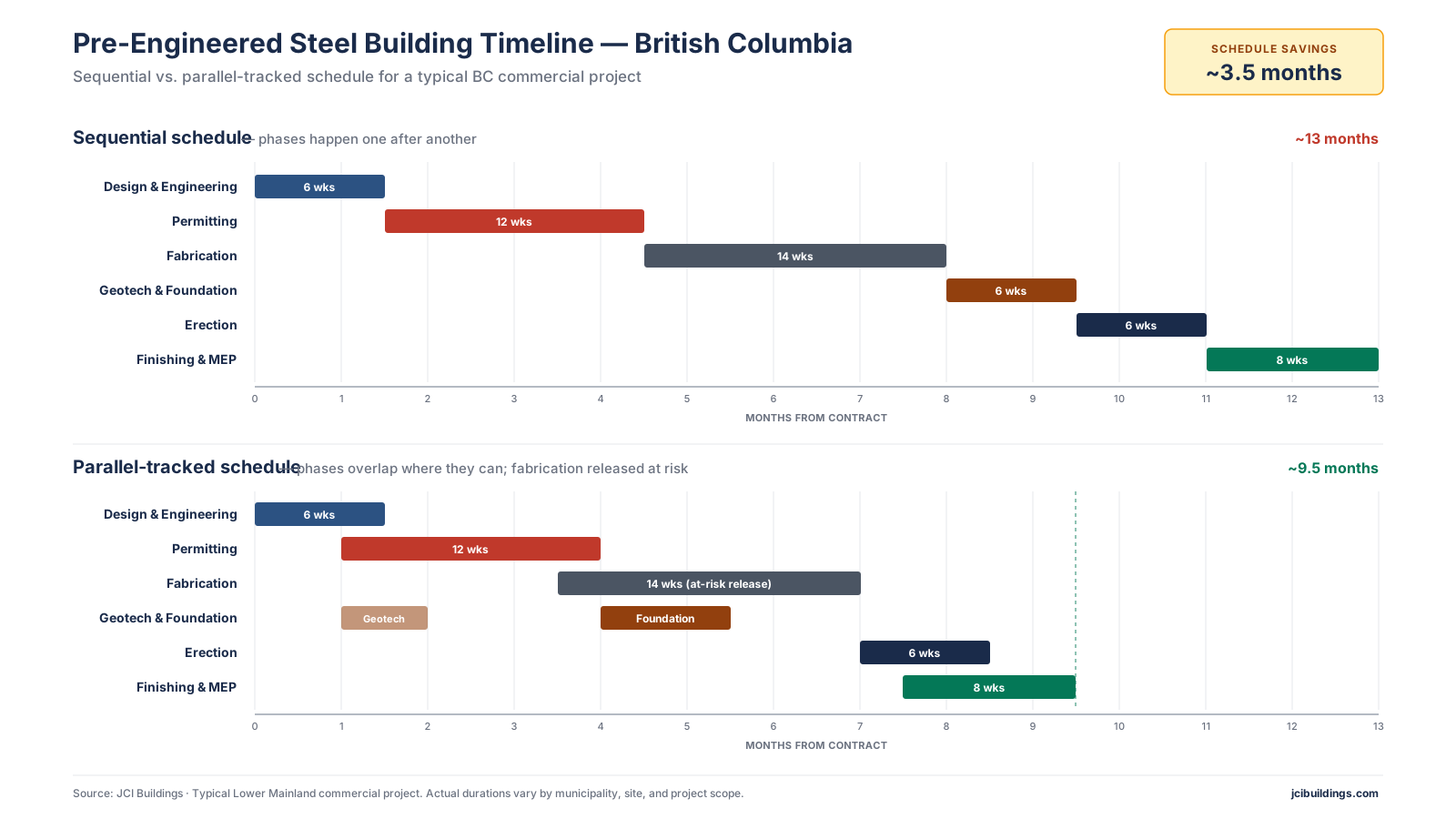
Phase 1 – Design and engineering (4–8 weeks)
This is where your program – the size, height, door count, snow and seismic loads, finishes – gets translated into structural drawings sealed by a BC-licensed engineer. Steel building manufacturers like Nucor produce a customized package based on these drawings, but the package is only as good as the inputs.
The phase moves fast when you arrive with decisions already made: square footage, ceiling height, dock door count, insulation level. It slows down when those decisions surface mid-design. Custom architectural features – unusual rooflines, complex glazing, mezzanines that change the load path – can also pull a “pre-engineered” building toward a custom build, and that adds weeks.
The single best way to compress this phase is to engage a geotechnical engineer the same week you sign the design contract. Geotech reports are an input to foundation design; if they arrive late, your structural drawings sit waiting.
Phase 2 – Permitting (6–16 weeks, sometimes longer)
Permitting is the most variable phase in a BC steel building project, and it is where most “fast” timelines fall apart. The municipality you are building in matters more than almost any other factor.
In the City of Vancouver, commercial permit processing has improved meaningfully since the post-pandemic backlog peak. As of 2026, a complete commercial permit application is typically reviewed in eight to twelve weeks. That is faster than 2022, but slower than 2019. Surrey, Burnaby, and Richmond run on similar timelines – generally eight to fourteen weeks for a complete commercial application. Burnaby moved its commercial permit intake to the My Permits Portal in late 2025, which has helped throughput.
Interior cities – Kelowna, Kamloops, Penticton, Prince George – are usually faster, often in the four to ten week range for a complete application. Rural and regional district permits vary widely; some communities have part-time building staff and can take longer than a major city.
The hidden time-eaters are the secondary approvals: rezoning if your land use is not already conforming, a development permit for form and character review, an Agricultural Land Reserve (ALR) referral if you are on farm land, an archaeological assessment if your site is in an area of known cultural significance, a riparian assessment near watercourses, and fire department review for hazardous occupancies like fuel storage or extraction. Any one of these can add weeks; in combination they can add months. Our BC permitting and zoning guide covers each in more depth.
The single best way to compress permitting is to submit a complete application – which sounds obvious, but is rare. Incomplete submissions go to the back of the queue when comments come back. Respond to municipal comments inside 48 hours. On large Lower Mainland projects, an experienced expediter is worth the fee.
Phase 3 – Fabrication (10–16 weeks)
Once approved drawings are released to the manufacturer, the steel building itself enters fabrication. Primary frames, secondary structural members, and wall and roof panels are cut, formed, painted, and shipped from the manufacturer’s plant. Insulated metal panels – when used for the envelope – are produced on a parallel schedule.
In 2026, most North American pre-engineered metal building plants are running ten to fourteen week lead times for primary structure once approved drawings are released. Insulated metal panels typically run eight to twelve weeks. JCI works with Nucor Building Systems for primary structure and Kingspan for insulated panels – both have North American manufacturing networks that ship reliably into BC.
You can sometimes compress this phase by releasing fabrication “at risk” once permit feedback signals approval is imminent. It is not free risk: if the city demands structural changes after fabrication has started, the cost of rework lands on you. On projects where the building geometry is firm and the city’s comments are clearly minor, it is often worth a couple of months on the schedule.
The biggest fabrication risk is not the manufacturer – it is owner-driven changes after the release-for-fabrication milestone. Once the steel is in production, every change costs both money and weeks.
Phase 4 – Site work and foundation (3–6 weeks)
While the steel is being fabricated, the site is being prepared. This phase is where BC’s geography asserts itself.
Geotechnical investigation comes first, and it is its own mini-project. Commercial geotech reports in BC typically run four to eight weeks from field work to final report. Sites with soft soils, high groundwater, or liquefaction risk – which means much of Richmond, Delta, and the lower Fraser River corridor – take longer because they require more boreholes, lab testing, and engineering analysis.
Once the geotech report is in hand, foundation construction begins. Footings or piles, slab pour, anchor bolts in place to receive the columns. Concrete cure adds calendar time even when the labour is fast – most structural concrete needs three weeks to reach the strength needed before steel erection begins.
BC weather windows matter here. The Lower Mainland and the Coast can pour foundations year-round with cold-weather measures. The Okanagan and Thompson regions can lose December through February to frost. Northern BC – Prince George, Fort St. John, and beyond – can lose eight to twelve weeks of pour-friendly weather. Schedule a foundation in March in Prince George and you may not pour until May.
Compression strategies exist: helical piles instead of cast-in-place footings where the geotechnical report allows, early-strength concrete mixes, and starting site clearing during permit review (if the municipality permits soft-cost site work without a building permit).
Phase 5 – Erection (4–8 weeks)
This is the visible phase – the one that shows up in the time-lapse videos. Primary frames are stood up, then purlins and girts, then sheeting, then trim, doors, and windows. A 20,000 sq ft warehouse erects in four to six weeks with a single crew. Double-crewing buys days, not weeks, because the work is sequential and crane-dependent.
Erection is sensitive to weather. High winds halt crane work entirely. Heavy rain slows but does not stop sheeting installation. Snow on the roof can force crews off in the Interior. A well-run BC erection crew plans around all three.
Phase 6 – Finishing, MEP, and occupancy (4–10+ weeks)
The steel is up, but the building is not done. Mechanical, electrical, and plumbing rough-ins run on their own lead times – and in 2026, HVAC equipment lead times can rival the steel building’s. Order rooftop units the day fabrication starts, not after.
Interior fit-out – racking, mezzanines, washrooms, offices – happens in this window. If a third-party tenant is taking the space, their tenant improvement work is essentially its own project on top of your base building.
Final inspections and the occupancy permit usually take one to three weeks of municipal back-and-forth after substantial completion. Plan for it.
Three sample BC schedules
To make the abstract numbers concrete, here are three recent project profiles. All are anonymized composites of typical projects.
9,000 sq ft equipment storage building, Vernon, BC. Rural site, no rezoning, simple geotechnical conditions, no fire suppression. Five and a half months from contract signing to occupancy. The owner had finished drawings and a clear program before contract; that decisive front-end is what made it fast.
22,000 sq ft distribution warehouse, Surrey, BC. Industrial-zoned site, ESFR sprinkler, dock-high loading, 32-foot clear height. Nine months from contract to occupancy. The single longest phase was permitting at fourteen weeks. The single biggest schedule save was releasing fabrication two weeks before final permit issuance, on the recommendation of an experienced project manager who had read the city’s first-round comments.
45,000 sq ft food-grade industrial facility, Burnaby, BC. Insulated metal panel envelope, ammonia refrigeration, development permit required, complex geotechnical conditions. Thirteen months from contract to occupancy. Permitting alone took five months because of the development permit and the hazardous occupancy review. The owner accepted this up front; the schedule held.
Five mistakes that quietly add months to a BC steel building project
Most schedule slippage on a steel building project does not come from the steel. It comes from the owner side of the table. The five most common timeline-killers we see:
- Picking a manufacturer before engaging a builder who knows BC code. Out-of-province kits sometimes need to be re-engineered for local snow and seismic loads. That is two to four weeks you did not budget.
- Treating geotechnical investigation as an afterthought. Geotech is a six-to-eight-week input. Engage early or wait late.
- Submitting an incomplete permit application. This is the single most common cause of permit delay. A rejection back to the applicant for missing documents can cost two to four weeks.
- Locking in finishes after release-for-fabrication. Every change order after fabrication starts adds time and cost. Decide once, decide early.
- Underestimating MEP lead times. HVAC equipment, transformers, and electrical service upgrades from BC Hydro can take longer than the steel itself. Order in parallel with fabrication, not after it.
How JCI Buildings compresses BC project timelines
JCI Buildings has been delivering pre-engineered steel buildings across British Columbia for decades. The schedules in this article are not theoretical for us; they reflect how we actually run projects.
We parallel-track design and permitting wherever a municipality’s process allows. We engage geotech early, so foundation design never waits on a borehole report. We work with Nucor’s North American fabrication network, which gives us reliable lead times into both the Lower Mainland and the Interior. And we maintain the relationships with BC municipal building staff that turn unclear comments into quick resolutions.
If you want a realistic, phase-by-phase schedule for your project – not a 60-day fairy tale – contact our BC team. We will walk you through your timeline before you sign anything.
Frequently asked questions
How long does it take to build a pre-engineered steel building in BC?
Most BC projects take six to twelve months from contract signing to occupancy. Simple agricultural buildings on rural land can finish in five to seven months. Complex Lower Mainland industrial projects with development permits and tenant improvements can take ten to fourteen months or longer.
What is the longest part of a steel building project?
For most BC projects it is permitting, especially in the Lower Mainland where commercial reviews currently run eight to fourteen weeks. Fabrication is a close second at ten to sixteen weeks. The two phases together usually represent more than half of the total project schedule.
Can I shorten the timeline by ordering the building before I get the permit?
Sometimes. Releasing fabrication before final permit issuance is called “at-risk” fabrication. It can save four to eight weeks on a project, but if the city demands structural changes after fabrication starts, the rework cost lands on you. It works best when permit feedback is clearly minor.
How long does a building permit take in Vancouver for a commercial project?
As of 2026, a complete commercial building permit application in the City of Vancouver typically takes eight to twelve weeks of city review. Incomplete applications take longer because comments restart the review queue. Projects requiring rezoning or a development permit add additional months on top.
Do steel buildings get built faster in winter or summer in BC?
It depends on the region. The Lower Mainland and the Coast support year-round foundation pours with cold-weather measures. The Okanagan can lose December through February to frost. Northern BC can lose eight to twelve weeks of pour-friendly weather. Erection itself is mostly weather-tolerant outside of high winds and heavy snow.
What is the difference between fabrication time and erection time?
Fabrication is the off-site manufacturing of the steel components in a plant – typically ten to sixteen weeks for a BC project. Erection is the on-site assembly of those components by a construction crew – typically four to eight weeks. Fabrication happens before the steel arrives on site; erection happens after.
How long does a foundation take to cure before we can erect the steel?
Most structural concrete needs about three weeks to reach the strength required before steel column installation. Early-strength concrete mixes can shorten this to ten to fourteen days. Helical pile foundations skip the cure time entirely and can be ready for steel within days of installation.
Why does my quote say 90 days and another company’s says 9 months?
The 90-day quote is almost certainly measuring fabrication time only – not design, permitting, geotech, foundation, or finishing. The 9-month quote is measuring contract-to-occupancy. They are not the same thing. Always ask a supplier exactly what their timeline includes before you compare quotes.
